

Marketplace Dynamics Series – Part 3 of 3
← Part 1: Marketplace Competition: An Australian Seller’s Perspective
← Part 2: Same Products, Different Rules: How Delivery Structure Shapes Competition
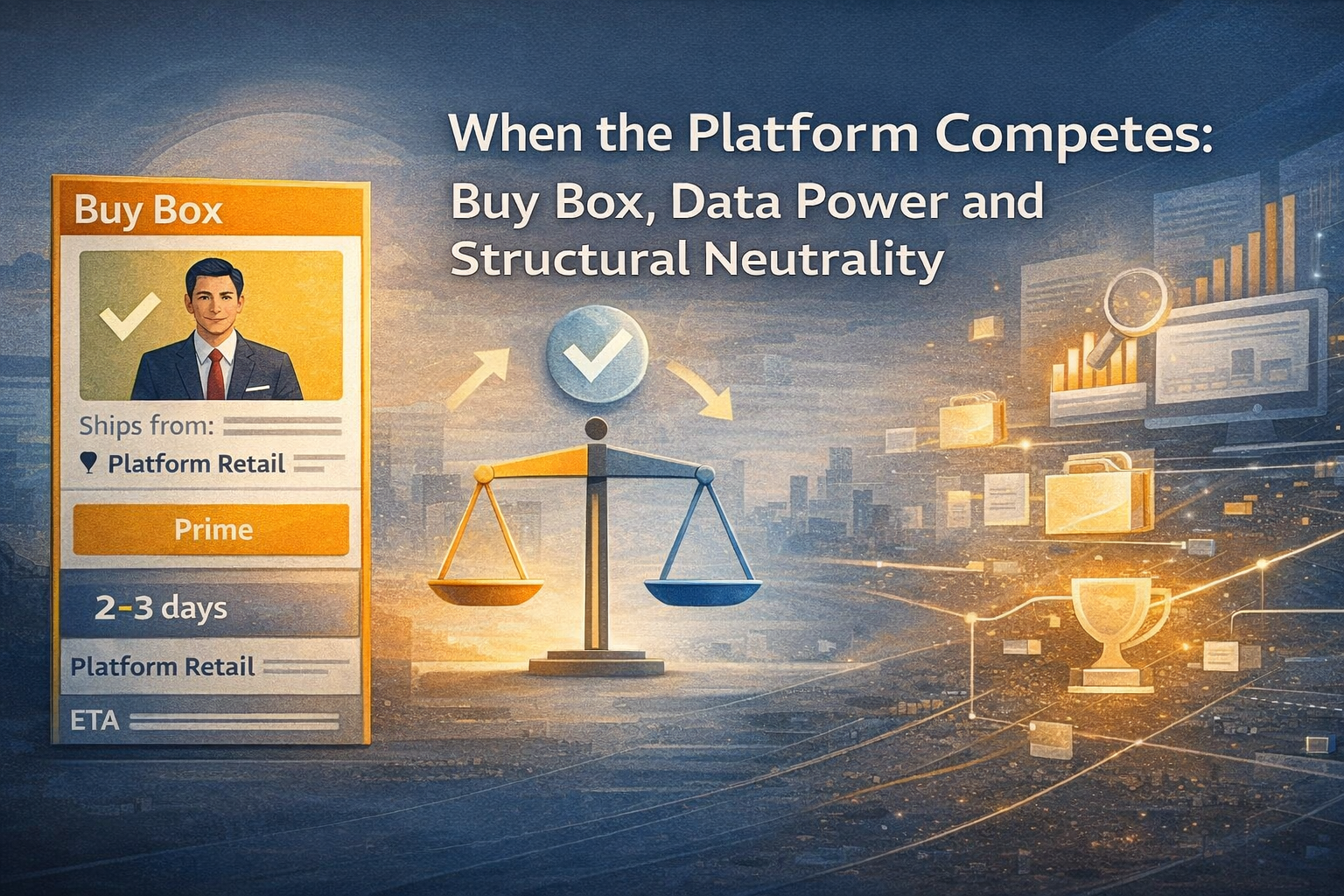
When the Platform Competes: Buy Box, Data Power and Structural Neutrality
As discussed in our analysis of delivery structure and performance standards, structural differences extend beyond logistics.
Modern marketplaces are no longer simple intermediaries connecting buyers and sellers. They are infrastructure providers, algorithm designers, and in many cases, direct competitors within their own ecosystems.
This dual role is not inherently problematic. But it raises an important structural question:
When a platform sets the rules and also competes within those rules, how should neutrality be defined?
The Buy Box as a Structural Lever
In theory, the Buy Box reflects price competitiveness, service standards and operational performance. In practice, it represents the primary gateway to visibility.
Sellers outside the Buy Box receive only a fraction of traffic, regardless of inventory readiness or dispatch speed. Visibility is therefore not merely a function of pricing — it is shaped by system architecture.

Visibility is not just about price or service.
It is about system design.
Listing Architecture and Competitive Boundaries
In manufacturer-branded categories such as printers, toner and ink cartridges, most products operate under shared listings where multiple sellers compete.
However, differentiated listing configurations — such as exclusive bundle structures — can effectively create controlled competitive environments. Bundling is legitimate retail practice, but within shared-brand ecosystems, listing control becomes structural influence.
Data Power and Information Asymmetry
One of the least visible yet most influential factors in marketplace competition is data concentration.
- Conversion rates
- Search demand patterns
- Price sensitivity data
- Inventory velocity metrics
- Regional purchasing behaviour
Platforms hold comprehensive visibility across these metrics. Individual sellers do not.
Data concentration creates asymmetry.
And asymmetry shapes outcomes.
Efficiency vs Ecosystem Health
Platforms must optimise for growth, speed and cost efficiency. These goals are rational and commercially necessary.
Yet ecosystem sustainability depends on consistent rule enforcement and perceived structural balance. Neutrality does not require identical outcomes — but it does require consistent standards.
Building on our earlier overview of marketplace competition in Australia, the governance question becomes even more significant.
This concludes our three-part analysis of marketplace competition, delivery structure, performance standards and governance architecture.